10 Paper-Crafting Tools for Handmade Pen-Pal Envelopes and Flat Inserts

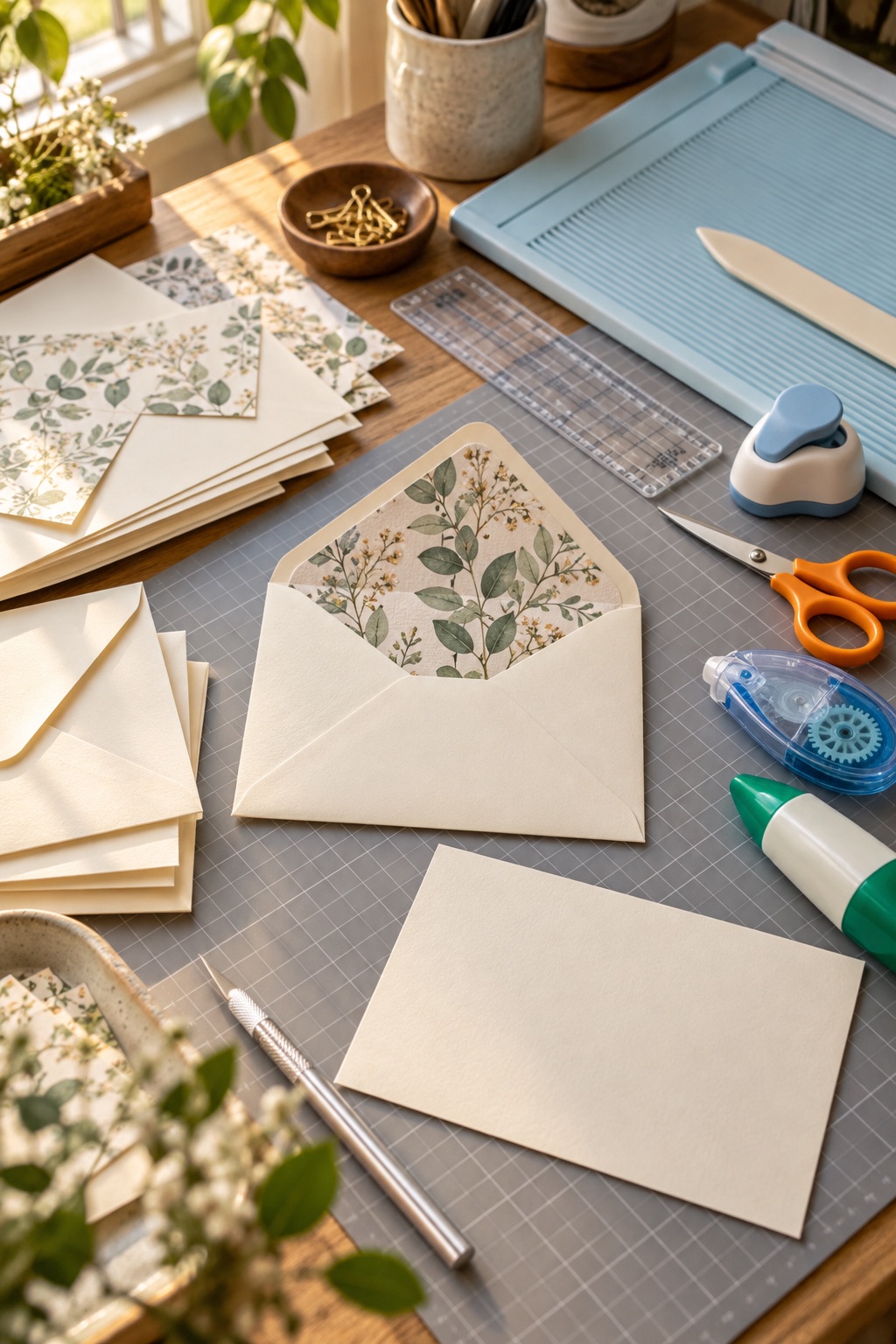
Handmade pen-pal mail looks effortless when folds meet cleanly, corners stay crisp and layered paper remains flat enough for an envelope. The challenge is choosing tools that solve different steps instead of collecting several gadgets that all do the same job.
This guide covers a compact envelope board, cutting and measuring tools, two adhesive formats, finishing punches and a protected cutting surface. The emphasis is on tools that help create custom envelopes and slim paper inserts while keeping size, control and storage needs easy to compare.
As an Amazon Associate, we earn from qualifying purchases.
1. We R Memory Keepers Envelope Punch Board
Key Specifications
| Specification | Details |
|---|---|
| Board size | 6.75 × 10.5 in. |
| Punch | Two-way envelope punch |
| Included tools | Board, bone folder and measurement chart |
| Use | Scoring and punching custom paper envelopes |
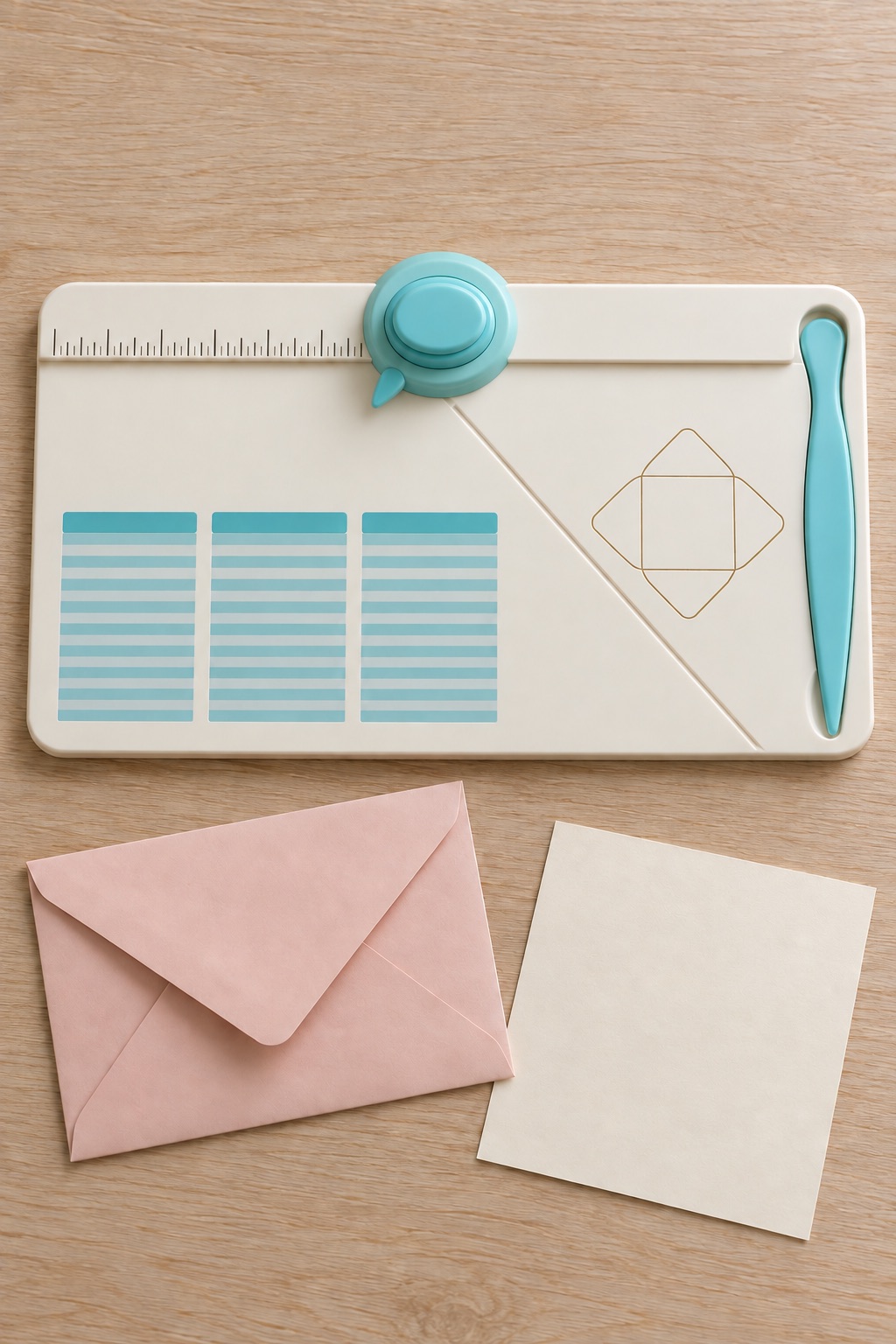
The We R Memory Keepers Envelope Punch Board combines the two repetitive envelope-making jobs—scoring fold lines and shaping the flap notches—on one compact board. Its measurement chart, two-way punch and included bone folder make it useful when a pen-pal project calls for a custom envelope rather than a standard store-bought size.
The 6.75-by-10.5-inch board is small enough for a craft cart or shallow drawer. Once paper is aligned to the correct starting mark, the diagonal groove guides consistent folds, while the punch shapes the intersections that would otherwise need careful hand cutting.
The chart still requires accurate paper sizing, and decorative or unusually thick stock should be tested before committing a finished design. This is the most focused choice for makers who regularly build envelopes and want repeatable construction in a footprint smaller than a full scoring board.
2. Fiskars SureCut Deluxe 12-Inch Paper Trimmer
Key Specifications
| Specification | Details |
|---|---|
| Cut length | 12 in. |
| Construction | Plastic base |
| Selected color | Orange accents and clear base |
| Operation | Manual sliding blade |
| Extension | Self-leveling swing-out measuring arm |
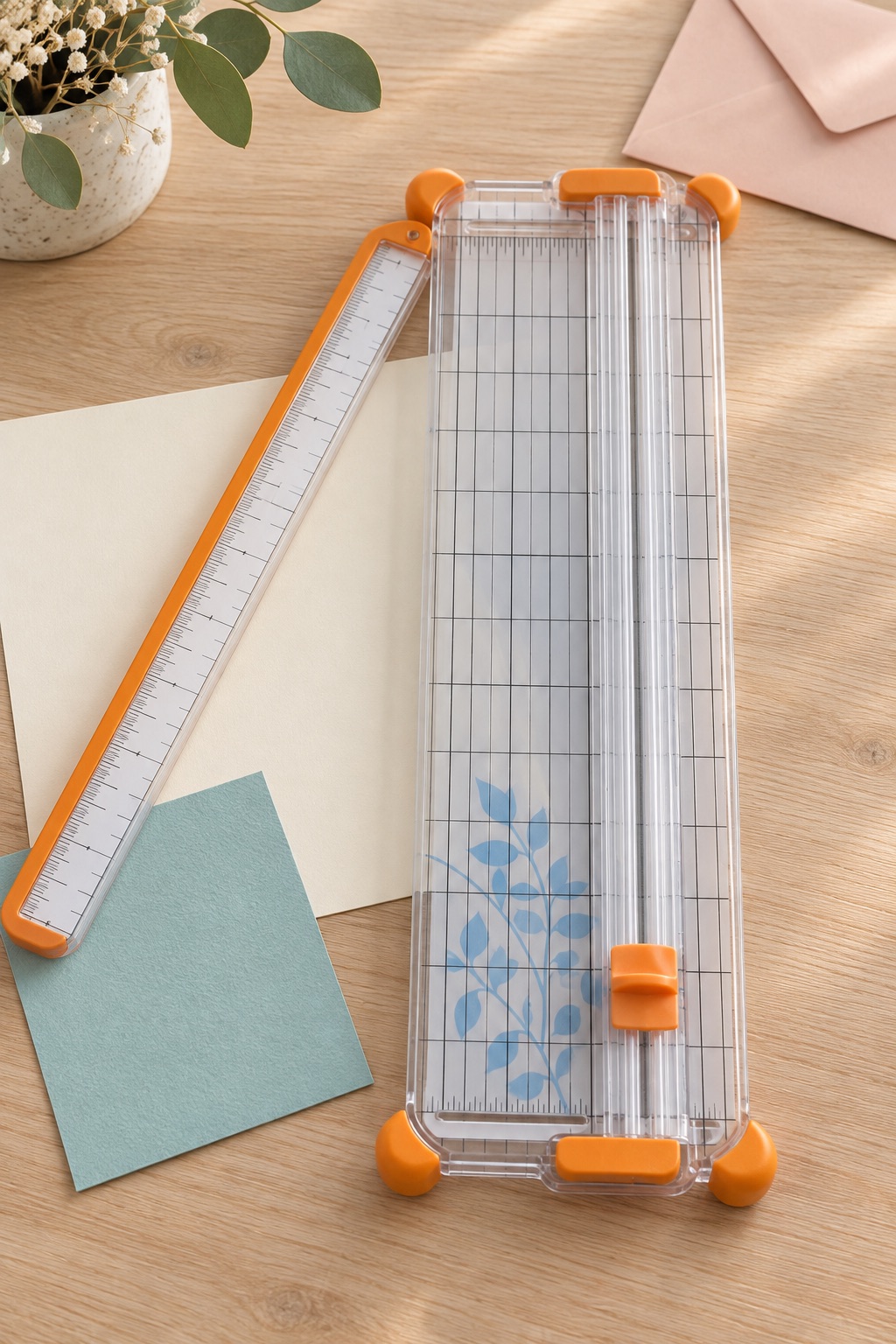
The Fiskars SureCut Deluxe trimmer is a practical starting point for turning full sheets into envelope blanks, writing-paper panels and rectangular flat inserts. Its 12-inch cut length accommodates common craft-paper dimensions, while the sliding blade offers a controlled straight cut without the swing of a guillotine arm.
A clear cutting rail helps show the intended cut line, and the self-leveling swing-out arm extends the measuring surface for wider sheets. The transparent base and orange guides make alignment easier without covering as much of the paper design as an opaque platform would.
This model is intended for straight trimming, not intricate shapes or heavy stacks. Allow room for the measuring arm when it is open, and replace a dull blade rather than forcing a cut. It suits letter writers who batch several coordinated envelope pieces and need repeatable edges.
3. Fiskars 5-Inch Orange-Handled Micro-Tip Scissors
Key Specifications
| Specification | Details |
|---|---|
| Nominal size | 5 in. |
| Blade material | Stainless steel |
| Handle | Orange double loop |
| Handedness | Right- and left-handed use |
| Included | One pair |
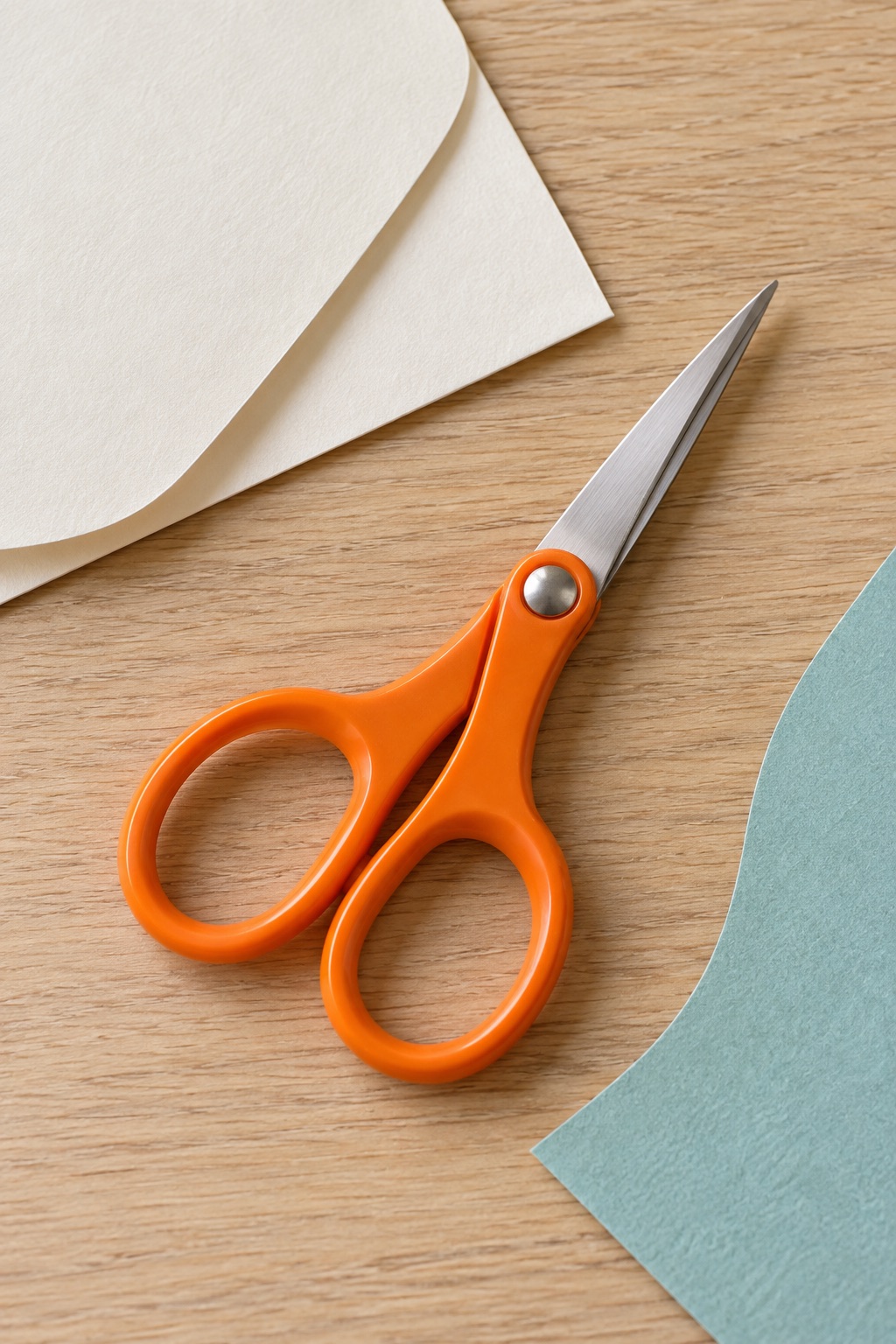
Fiskars’ 5-inch micro-tip scissors handle the small corrections that a paper trimmer cannot: clipping narrow tabs, refining a curved insert and trimming a tiny overhang after layers are assembled. The short stainless-steel blades taper to fine points, giving the user a clearer view around detailed paper cuts.
Two smooth orange finger loops form a conventional compact handle that can be used in either hand. Because the tool is only five inches long, it fits easily beside stamps, pens and adhesive supplies in a portable correspondence kit.
These scissors are better for precision than long continuous cuts, where a trimmer or craft knife will usually make a straighter line. Keep the fine tips protected in storage and away from children. They are a useful secondary cutter for decorative edges, tiny paper motifs and last-minute fit adjustments.
4. Tombow MONO Permanent Adhesive Applicator 62106
Key Specifications
| Specification | Details |
|---|---|
| Format | Dry adhesive tape applicator |
| Bond | Permanent |
| Dispenser | Refillable plastic case |
| Selected color | Blue |
| Pack | One applicator |
| Acidity | Acid-free adhesive |
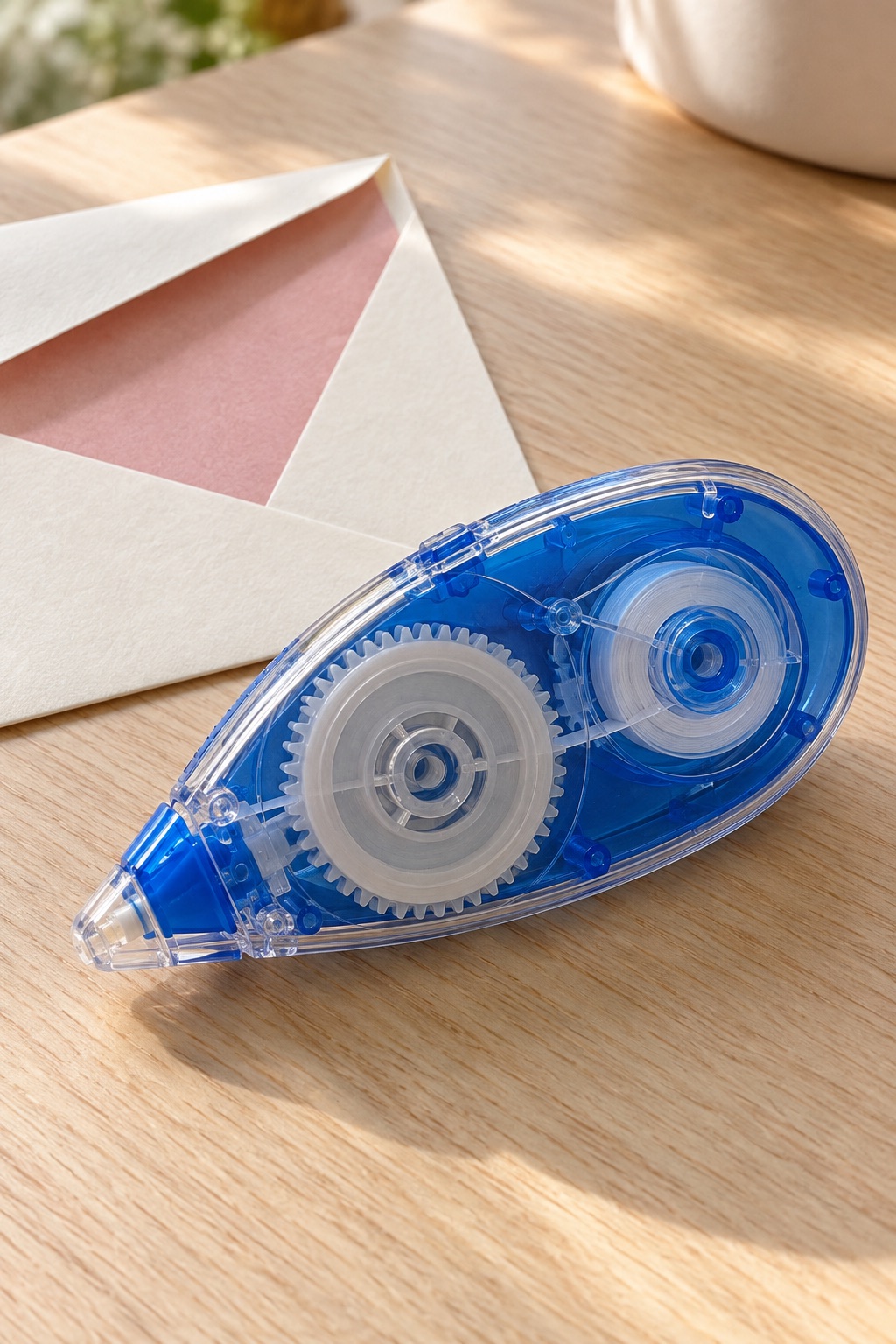
The Tombow MONO permanent adhesive applicator lays down dry adhesive without adding moisture to envelope seams or layered paper. That matters for flat mail because liquid glue can buckle lightweight stock if too much is applied. The pointed nose also makes it easier to follow a narrow flap or border.
Its blue refillable case holds a permanent, acid-free adhesive tape. The bond is immediate, so a finished insert can be assembled without a drying period and moved off the work surface soon afterward. A transparent portion of the case lets the remaining roll stay visible.
Immediate grab leaves little opportunity to reposition a crooked layer, so align pieces before pressing firmly. Refill compatibility is another detail to check before restocking. This applicator suits clean envelope seams, photo-safe flat inserts and paper layers that should remain smooth.
5. Tombow MONO Multi Liquid Glue 62191
Key Specifications
| Specification | Details |
|---|---|
| Capacity | 0.88 fl. oz. |
| Applicators | Fine pen tip and broad tip |
| Bond options | Permanent when joined wet; repositionable when allowed to dry |
| Acidity | Acid-free and photo-safe |
| Pack | One bottle |
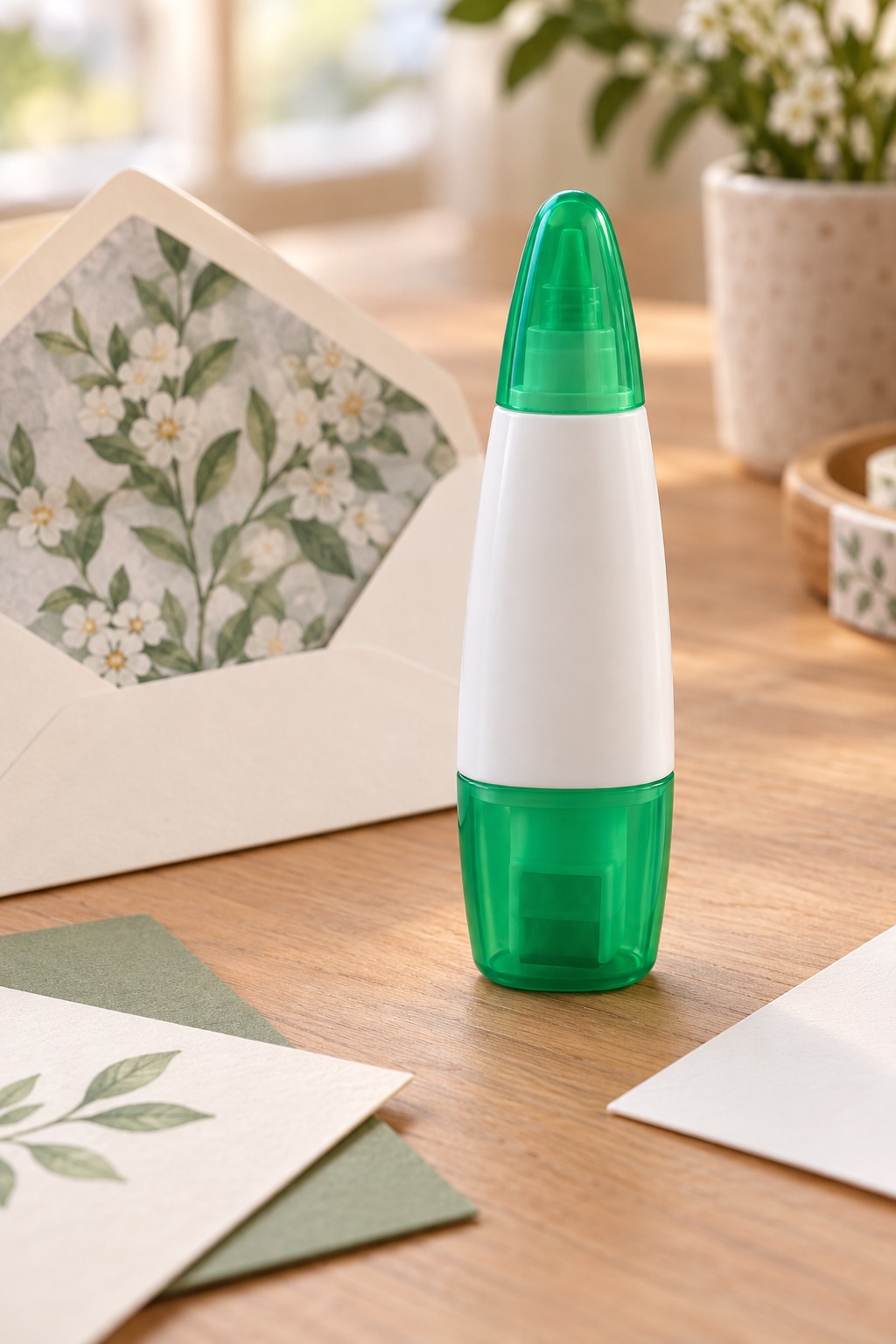
Tombow MONO Multi liquid glue provides more application control when a project mixes narrow details with broader paper areas. The 0.88-fluid-ounce bottle has a fine pen tip at one end and a broad tip at the other, reducing the need to keep separate bottles for small embellishments and larger panels.
The acid-free, photo-safe formula can form a permanent bond when surfaces are joined while wet. Letting the adhesive dry before joining creates a repositionable bond, a useful option for temporary placement while testing the balance of a flat insert.
Liquid adhesive still needs a light hand on thin paper; excess moisture can show through or cause rippling. Cap both ends promptly and practice on a scrap when switching bond methods. It fits makers who want one bottle for detailed collage pieces, address-label layers and envelope construction.
6. QIQQIKIN 3-in-1 Paper Corner Rounder
Key Specifications
| Specification | Details |
|---|---|
| Corner radii | 4 mm, 7 mm and 10 mm |
| Dimensions | 2.8 × 2.4 × 1.4 in. |
| Materials | Plastic body with zinc-alloy mechanism |
| Selected color | Blue and white |
| Paper guidance | 70–230 gsm |
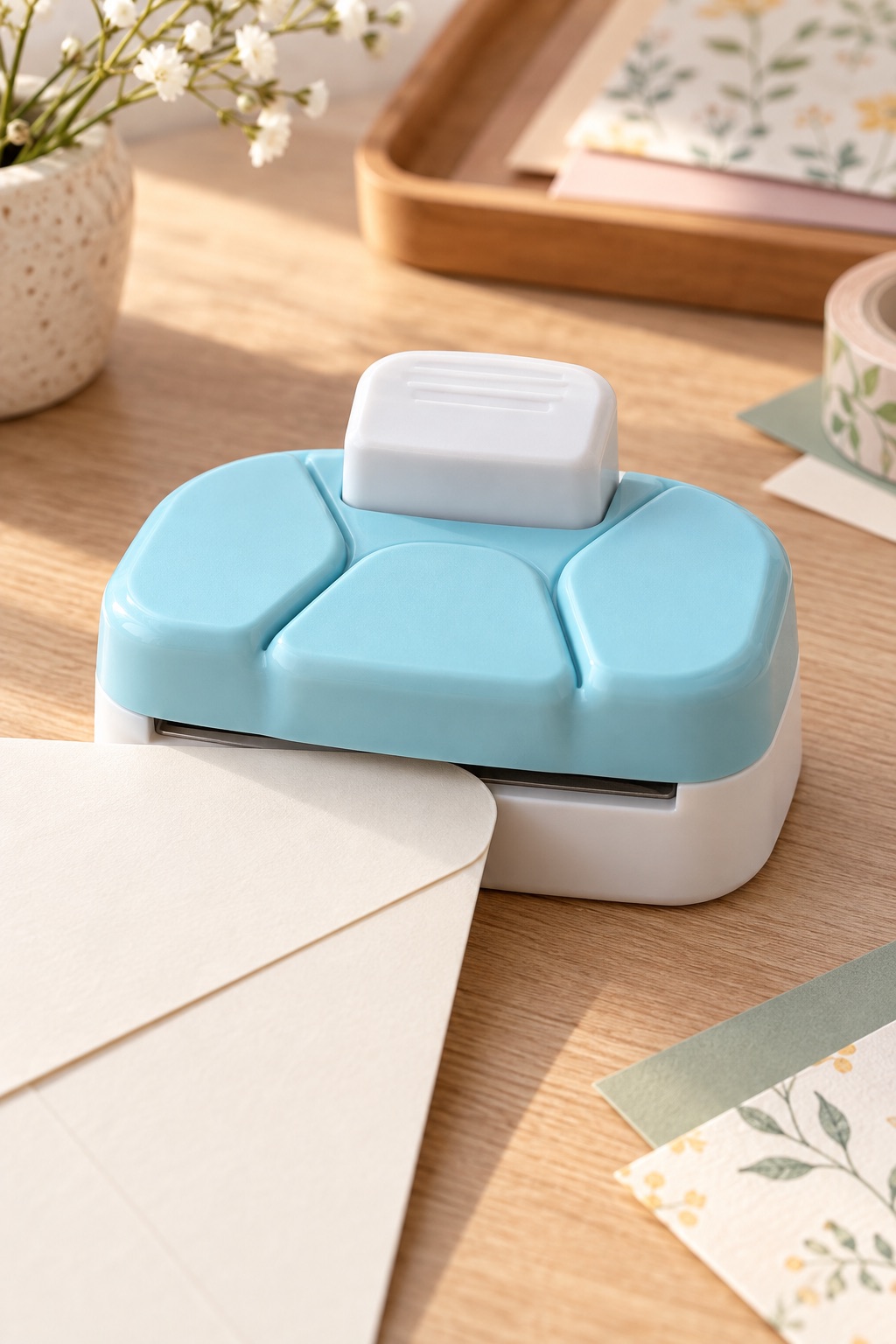
The QIQQIKIN 3-in-1 corner rounder gives flat inserts a finished shape without requiring a template and scissors. Three press zones cut 4-, 7- and 10-millimeter radii, so a maker can choose a subtle softened corner or a more noticeably rounded profile from the same compact punch.
Its blue-and-white body measures about 2.8 by 2.4 by 1.4 inches. The paper slot guides a corner toward the internal zinc-alloy mechanism, while the separate radius controls make the intended cut easier to select at a glance.
The listed paper guidance is 70 to 230 gsm, so very thin tissue or thick layered board may not cut cleanly. Insert one corner squarely and clear scraps regularly. This punch is especially useful for recipe cards, mini prints and note inserts that need consistent corners across a coordinated mail set.
7. Scor-Pal Eighths 12-Inch Scoring Board
Key Specifications
| Specification | Details |
|---|---|
| Working area | 12 × 12 in. |
| Groove spacing | 1/8 in. |
| Included tool | Scoring tool |
| Tool storage | Recessed snap-in top slot |
| Weight | 1.32 lb. |
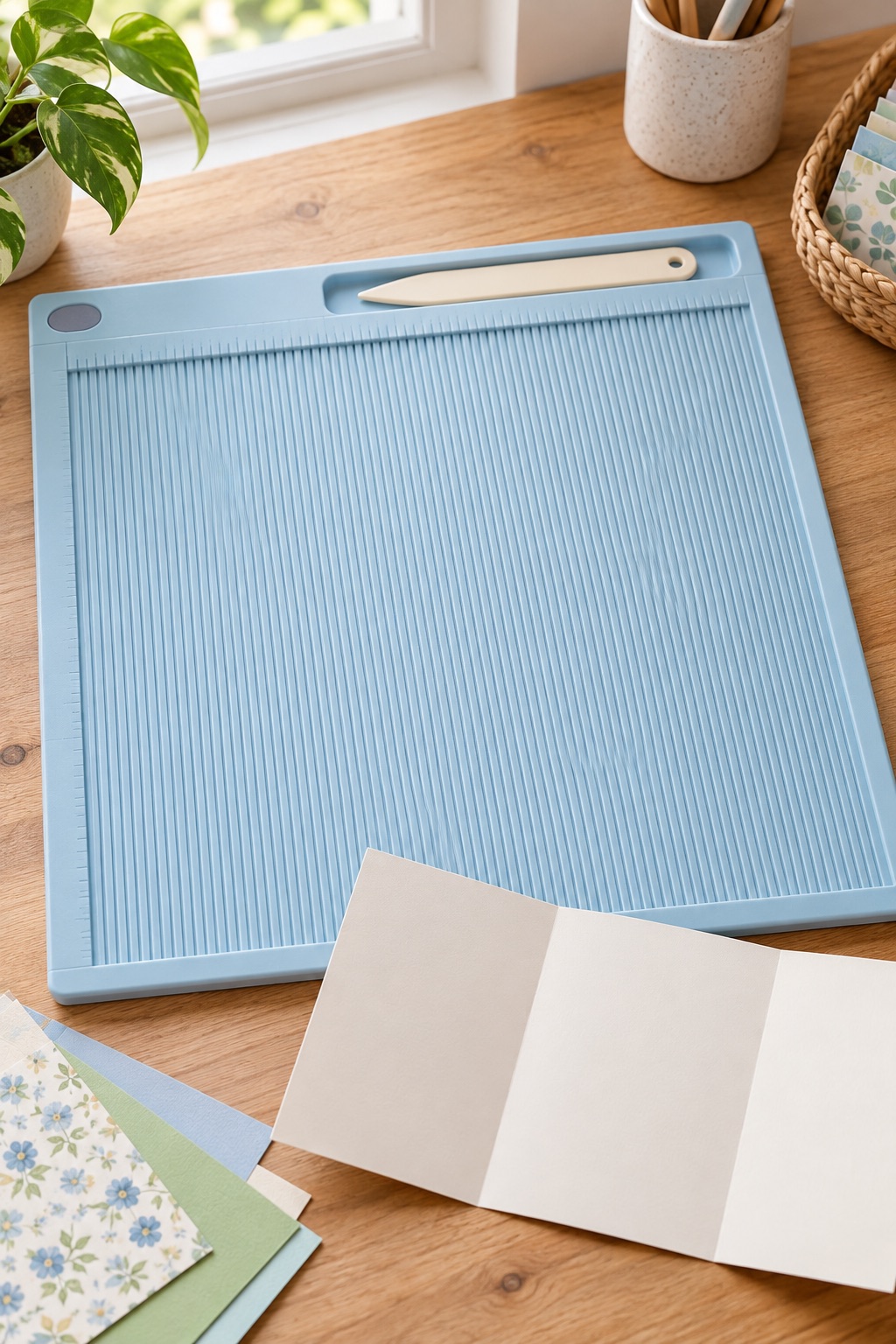
The Scor-Pal Eighths scoring board is the roomier option for makers who fold several paper sizes or build inserts with gates, pockets and panels. Its 12-by-12-inch working area has grooves at one-eighth-inch intervals, supporting precise fold placement without moving a separate ruler between every score.
A scoring tool is included and stores in a recessed snap-in slot along the top of the pale-blue board. The dense parallel grooves help keep fold lines straight across larger sheets, which is valuable when two sides of an envelope or folio must meet evenly.
This full-size board takes more desk and storage space than the compact envelope board, and it does not trim paper. Confirm measurements before scoring because a deep misplaced line remains visible. Choose it for varied paper-folding projects, larger correspondence sets and flat inserts with multiple controlled folds.
8. Westcott 12-Inch Acrylic Clear Ruler
Key Specifications
| Specification | Details |
|---|---|
| Length | 12 in. |
| Material | Clear acrylic |
| Scales | Imperial and metric |
| Edge | Raised beveled edge |
| Pack | One ruler |
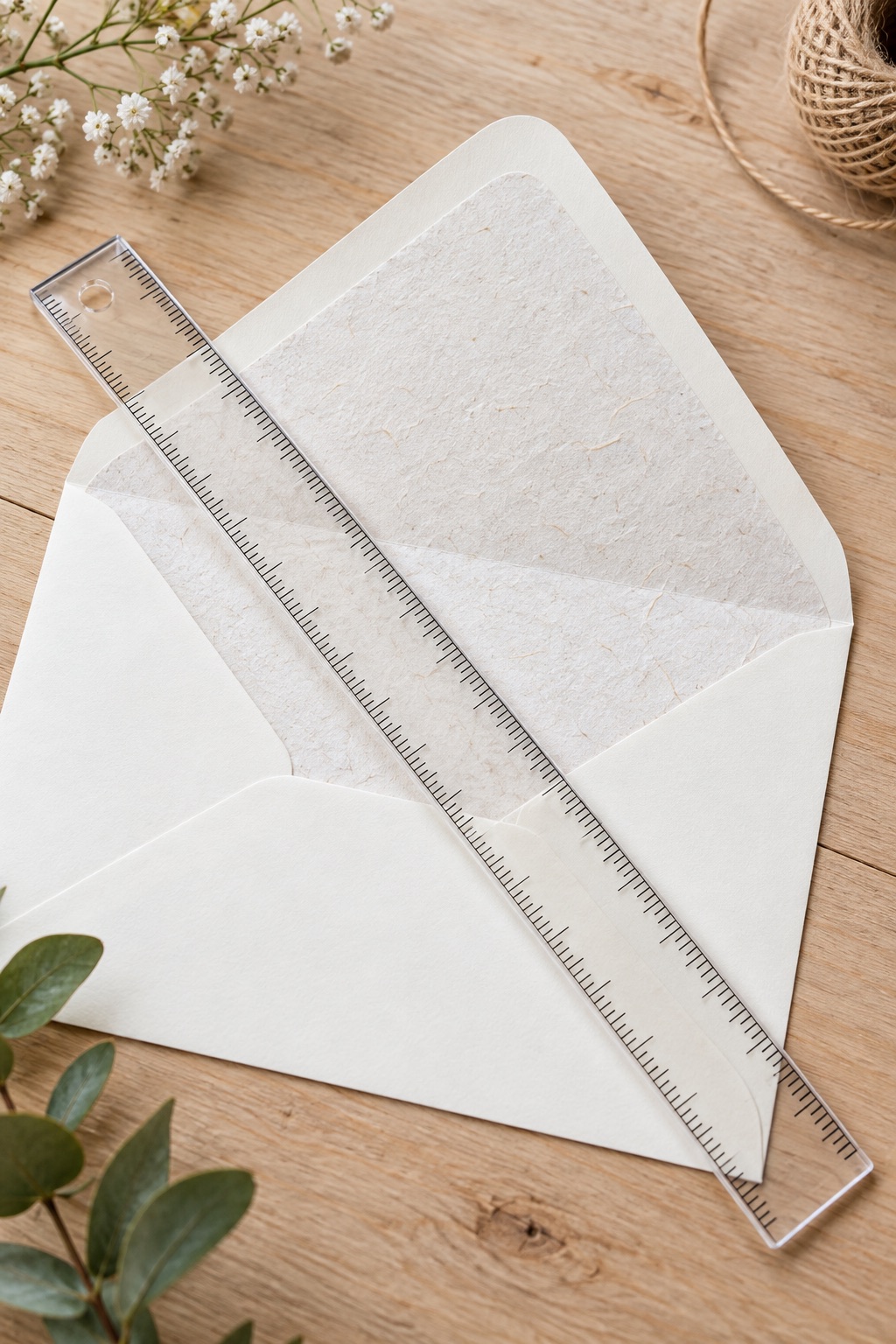
The Westcott 12-inch clear acrylic ruler is a simple measuring tool that remains useful at nearly every stage of pen-pal paper crafting. Its transparent body lets pattern placement, handwriting guides and paper edges remain visible, while imperial and metric scales support templates sourced in either system.
A raised beveled edge helps separate the ruler from wet ink and gives fingers a defined place to hold. The 12-inch length suits common scrapbook and letter-paper dimensions without becoming awkward on a small work surface.
Acrylic rulers are intended for measuring and drawing; a metal edge is preferable when guiding repeated knife cuts because a blade can nick plastic. Keep the ruler flat to avoid snapping it. This is the dependable choice for centering address panels, checking fold marks and laying out straight decorative borders.
9. Fiskars 18-by-24-Inch Self-Healing Cutting Mat
Key Specifications
| Specification | Details |
|---|---|
| Dimensions | 18 × 24 in. |
| Surface | Self-healing |
| Sides | Double-sided |
| Selected color | Gray |
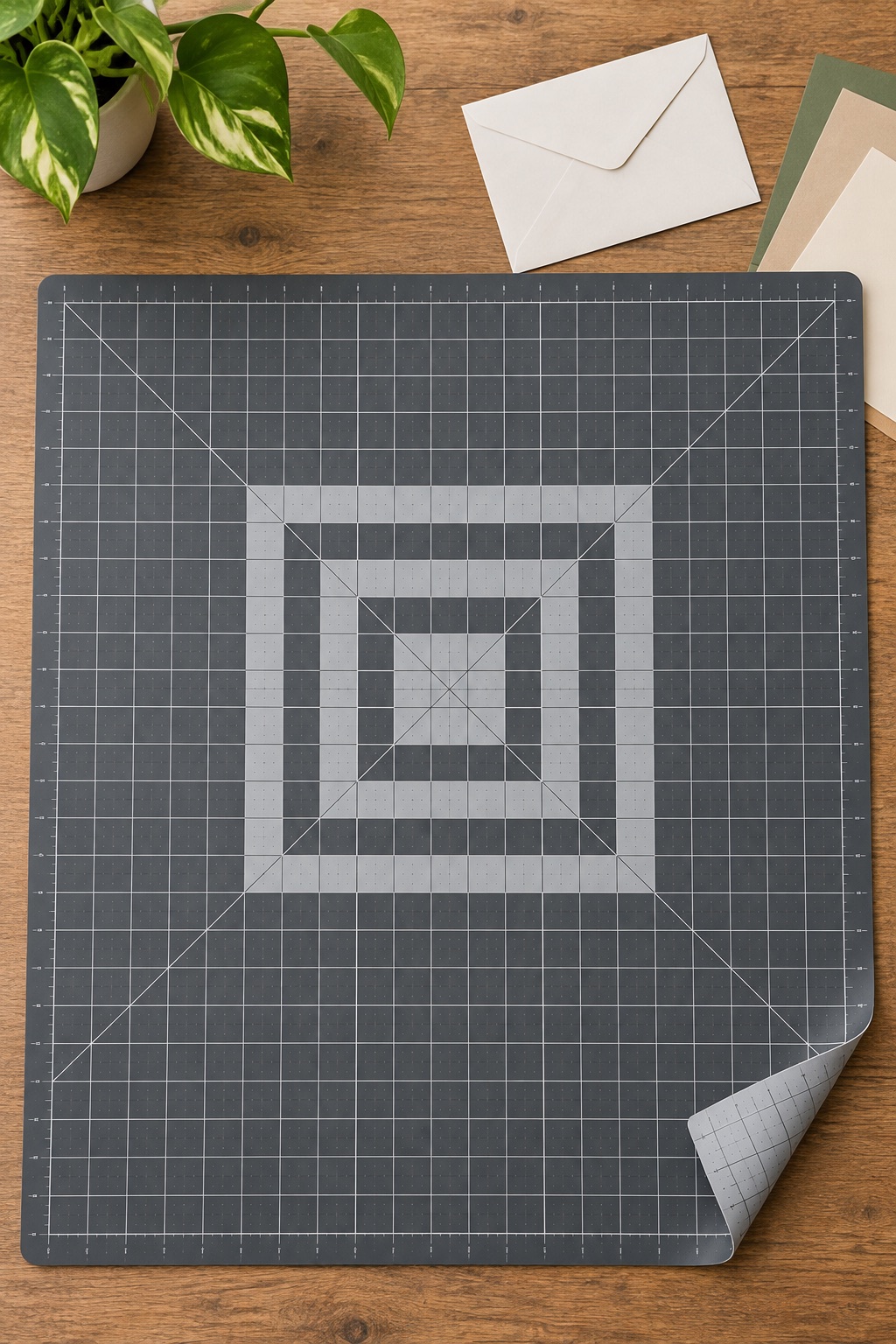
| Guides | Grid plus 30-, 45- and 60-degree bias lines |
The Fiskars 18-by-24-inch self-healing mat gives envelope and insert cutting a dedicated surface instead of risking a desk or dining table. Its gray double-sided work area is large enough for common paper sheets, with a grid and angled guides that help align rectangular pieces and diagonal cuts.
Self-healing construction allows shallow blade lines to close rather than leaving a permanently rough cutting path after each project. The 30-, 45- and 60-degree guides are also useful for repeatable geometric inserts, corner details and angled envelope liners.
An 18-by-24-inch mat needs flat storage and should be kept away from heat that could warp it. Deep cuts and excessive pressure can still damage the surface. It is a strong foundation for makers who use a precision knife regularly or want a generous, clearly marked station for assembling coordinated mail.
10. X-ACTO No. 1 Precision Knife with Five No. 11 Blades
Key Specifications
| Specification | Details |
|---|---|
| Knife style | No. 1 precision handle |
| Installed blade | No. 11 fine-point blade |
| Replacement blades | Five No. 11 blades |
| Handle | Silver aluminum |
| Included pieces | One knife and five replacement blades |
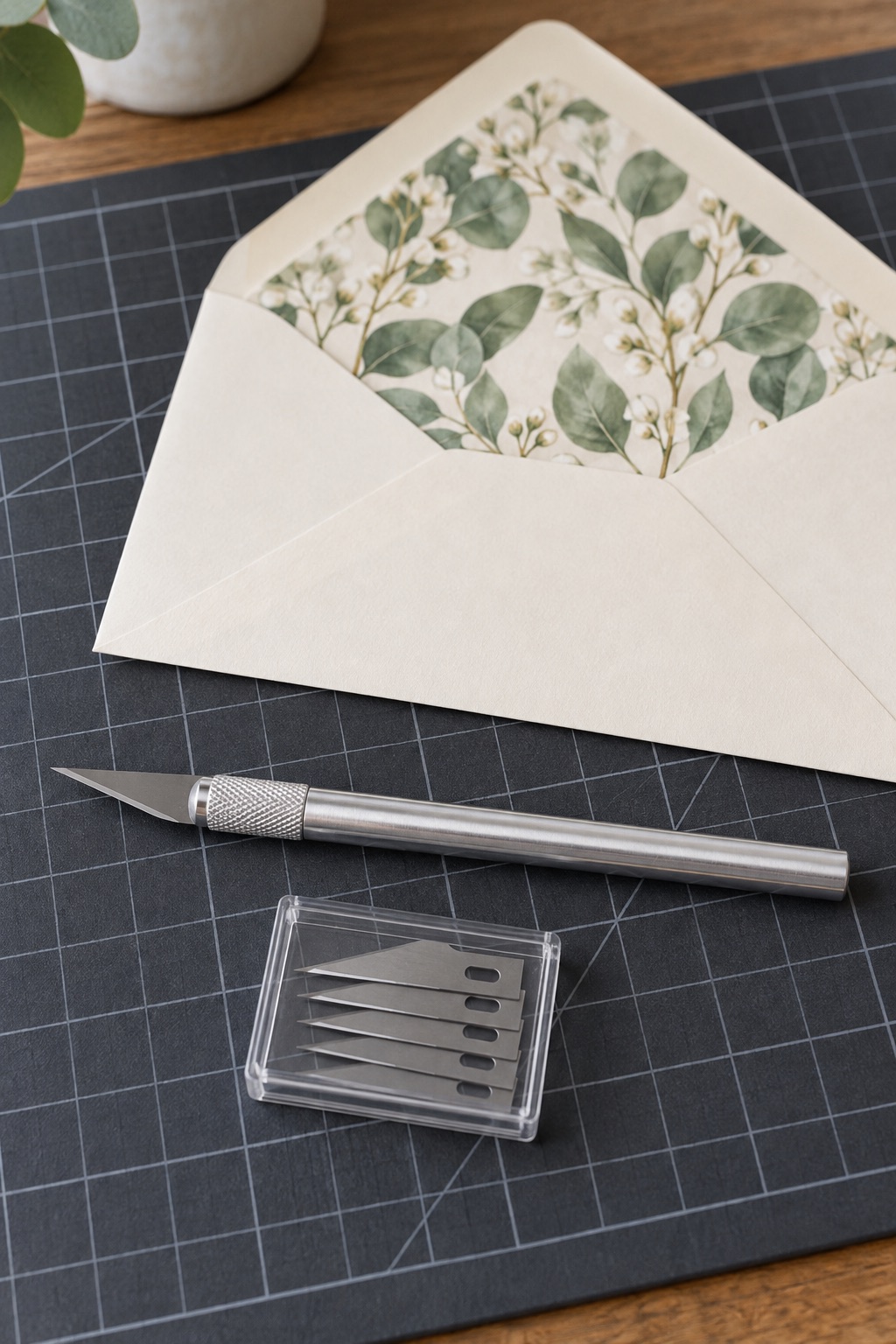
The X-ACTO No. 1 precision knife covers controlled cuts that are difficult with scissors, including internal windows, narrow slots and straight edges along a template. The set pairs a slim silver aluminum handle with a fine-point No. 11 blade and includes five matching replacement blades.
A diamond-knurled front section provides grip near the cutting point, while the ridged metal collar secures the installed blade. Used with a cutting mat and suitable straightedge, the narrow tip can start inside a paper shape without first cutting through the outer edge.
This is a sharp craft tool, not an all-ages supply. Cut away from hands, retract or cover the blade when possible, and store the knife and replacements where children cannot reach them. It best suits adult makers adding precise windows, layered openings or stencil-like details to flat mail.
How to Choose Tools for Handmade Pen-Pal Mail
Start with the step that causes the most inconsistency. An envelope punch board makes repeated envelope construction easier, while a full scoring board is more versatile for multi-fold inserts.
A paper trimmer handles long straight edges quickly; micro-tip scissors and a precision knife are complementary tools for small exterior details and internal cuts.
Match adhesive to the paper. A dry runner keeps lightweight pieces flat and bonds immediately, whereas dual-tip liquid glue offers more control over tiny and broad areas but should be applied sparingly.
For finishing, a corner rounder creates repeatable curves without measuring each corner by hand.
Finally, consider the work area and safety. A clear ruler helps with layout, but a knife should be paired with a cutting mat and a suitable cutting edge.
Measure the available drawer or desktop before choosing the larger 12-inch scoring board or 18-by-24-inch mat, and store blades separately from general stationery.
Frequently Asked Questions
Which tool is most useful for making envelopes from scratch?
An envelope punch board combines measurement guidance, diagonal scoring and notch punching in one tool. A trimmer is still useful for cutting the starting sheet to the correct size.
Is a scoring board the same as a paper trimmer?
No. A scoring board presses controlled fold lines into paper; a trimmer separates paper with a blade. Some projects need both so the blank is cut accurately before it is folded.
What adhesive helps paper inserts stay flat?
A dry adhesive runner adds no liquid moisture and bonds immediately, which can reduce buckling on light paper. Liquid glue offers more placement options but should be used sparingly and allowed to dry flat.
Can a corner rounder cut any paper thickness?
No. The three-radius punch in this guide lists a 70-to-230-gsm paper range. Very thin, laminated or heavily layered materials may not feed or cut cleanly.
What is the safest setup for a precision craft knife?
Use it on a self-healing cutting mat, cut away from hands and keep replacement blades secured. Children should not use or access the knife, and damaged or loose blades should be replaced before the next cut.