
11 Acrylic Paint Marker Sets for Detailed Pebble Art

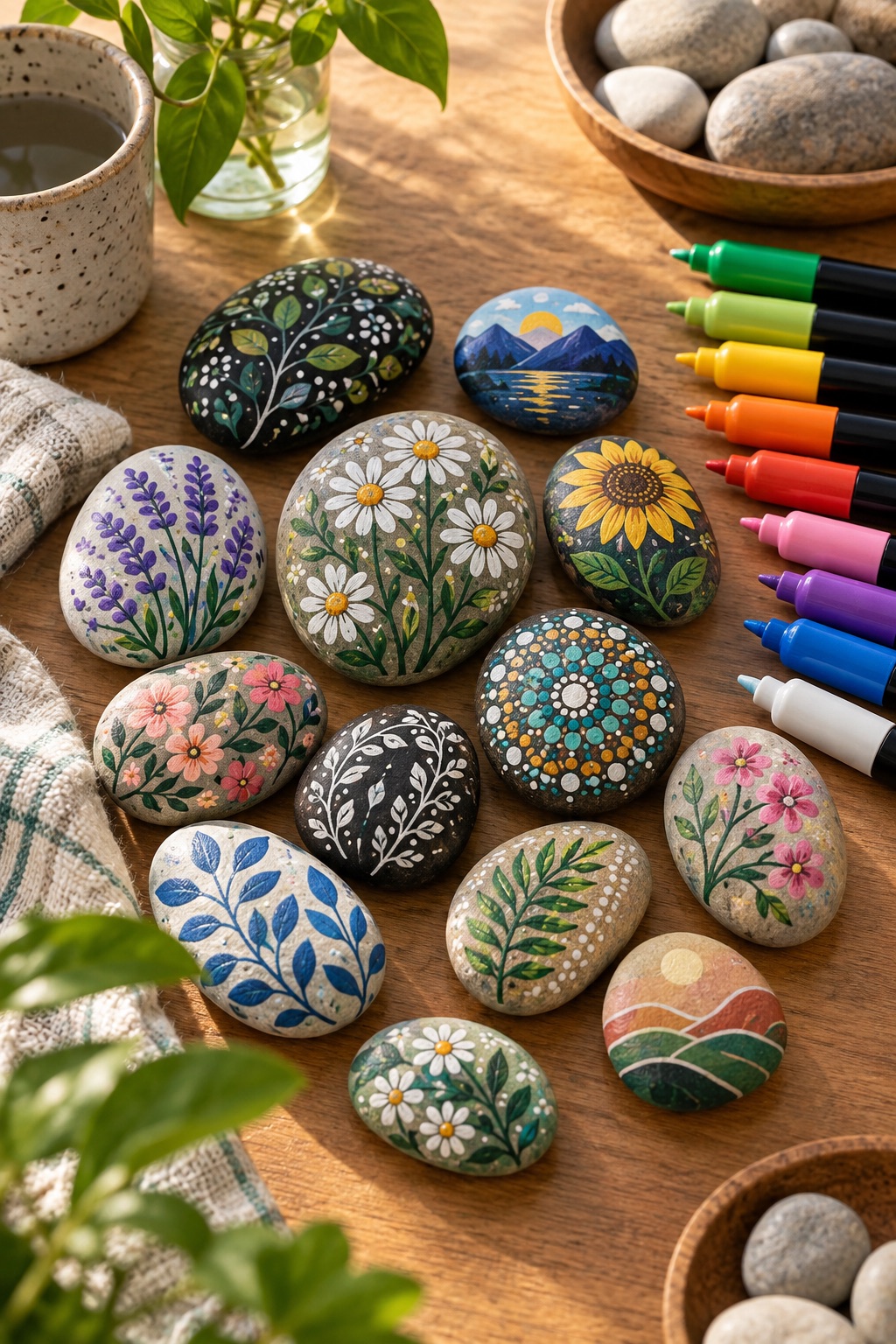
A smooth pebble makes a tiny canvas, and the marker tip matters as much as the color range. An extra-fine point can draw leaf veins or small lettering; a flexible brush tip is quicker for petals and backgrounds; a dot tip makes even circles without a separate tool.
These 11 acrylic paint marker sets give small-stone artists different ways to balance detail, coverage, and storage. For a first project, choose clean, dry, smooth stones with enough room for your design.
Test every pen on scrap paper, let each color layer dry, and follow the maker’s instructions if you plan to seal or display a finished stone outdoors.
As an Amazon Associate, we earn from qualifying purchases.
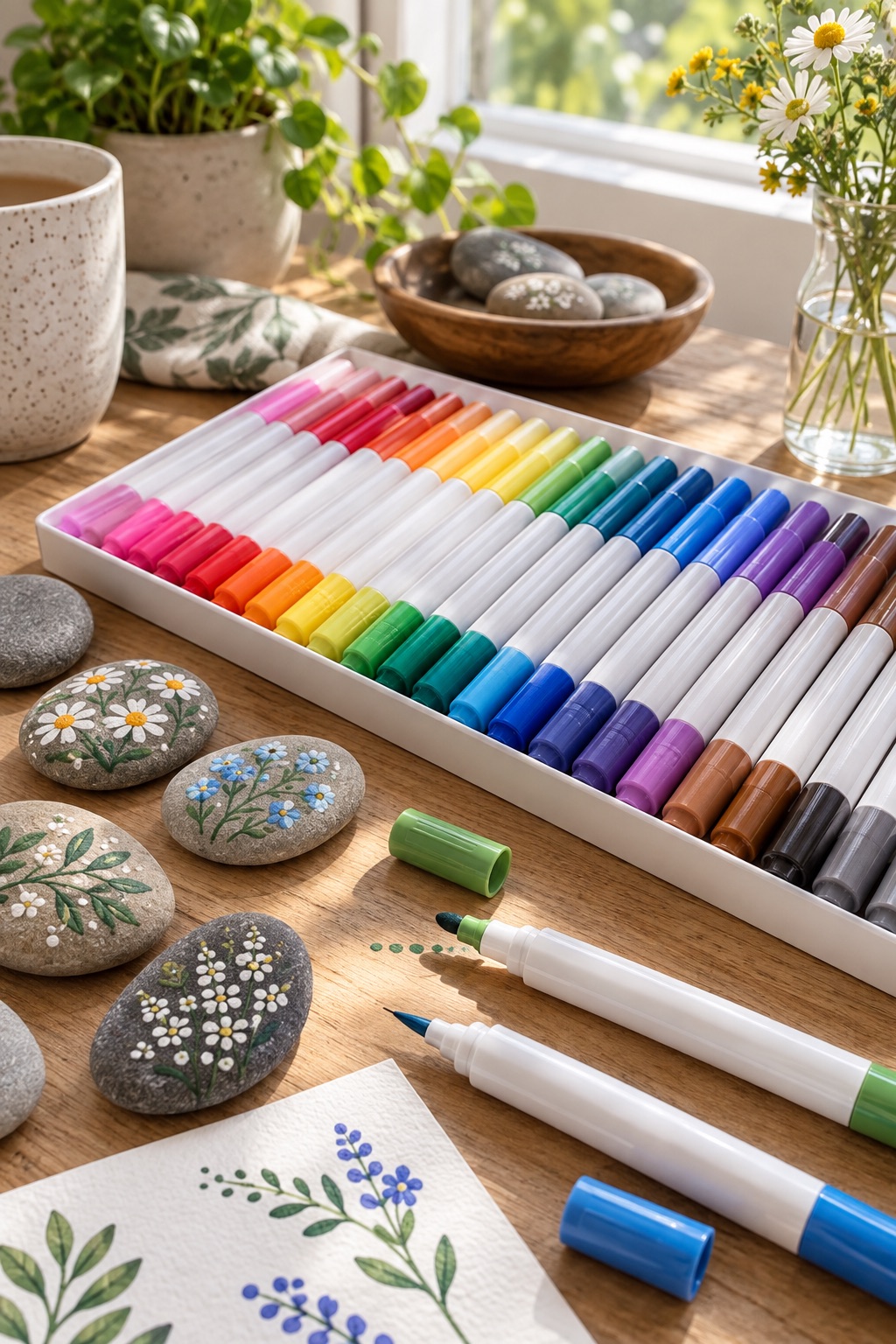
1. Shuttle Art 36-Color Dot and Fine-Tip Markers
| Key Specifications | |
|---|---|
| Colors | 36, including 6 metallic shades |
| Tips | 1 mm fine tip and flexible 1–5 mm dot tip |
| Ink | Water-based acrylic paint |
| Suitable surfaces | Rocks, wood, ceramic, glass, and more, per listing |
The fine-and-dot combination is particularly useful when a design moves from tiny outlines to repeated petals or mandala circles. Rather than swapping between a paint pen and a separate dotting tool, you can make both marks with one marker.
Thirty-six colors give a beginner room to experiment without the bulk of a very large case. The six metallic shades can add small highlights, though they may appear differently on light and dark stones. Try a swatch on a spare rock before committing to a detailed pattern.
The flexible dot end changes mark size with pressure, so practice on paper first. This set suits small floral stones and geometric motifs more than artists who want broad, single-stroke background coverage.
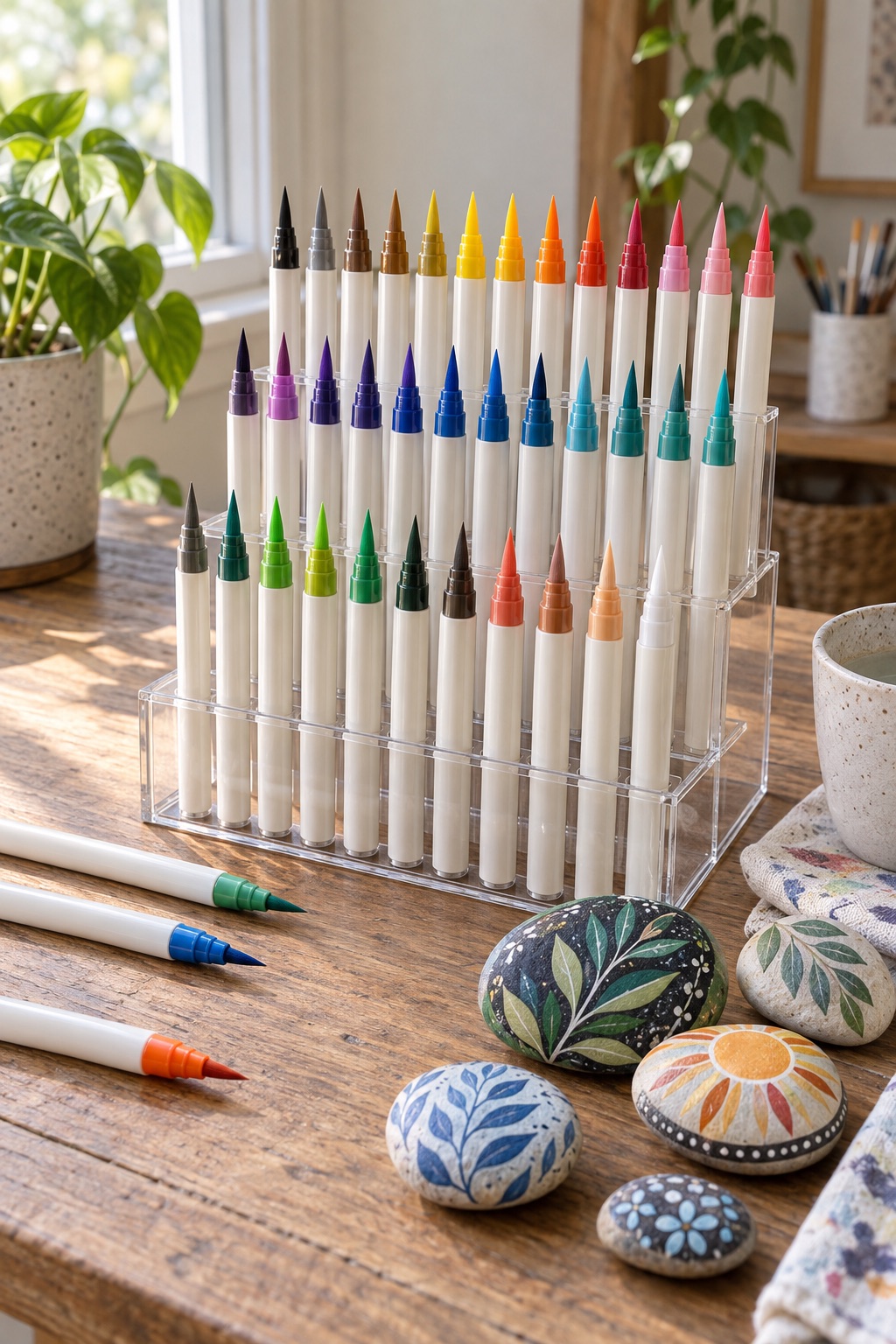
2. Shuttle Art 36-Color Automatic-Ink Brush Markers
| Key Specifications | |
|---|---|
| Colors | 36 |
| Tip | Flexible brush, about 1–5 mm stroke width |
| Ink delivery | Automatic ink-control design |
| Included storage | Three-tier clear acrylic box, per listing |
This is a brush-first option for pebble art that mixes delicate stems with wider petals. The tip can make a narrow line when used lightly and a fuller stroke as it bends, giving more range than a fixed-size bullet point.
The listed storage box keeps a mid-size palette visible while you work. That matters when a small project uses several closely related greens or blues: finding the next color should not interrupt the flow of painting. The direct ink-control design also avoids the repeated nib-pressing routine of some pump markers.
A brush nib still requires a steady hand on curved stone. If your priority is the smallest possible lettering or crisp hairline outlines, pair this set with a finer point rather than asking the brush to do everything.
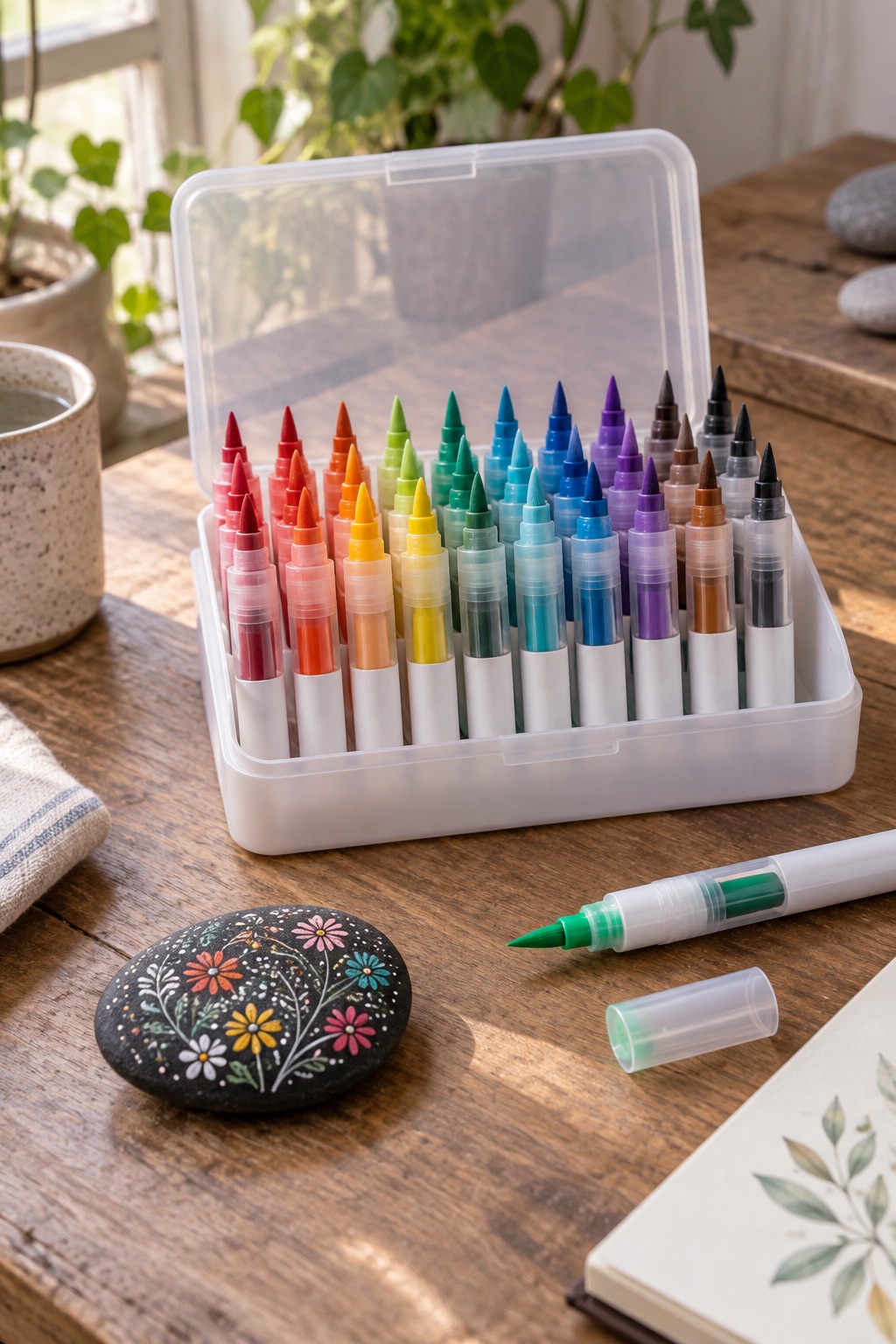
3. Ohuhu Nahuku 24-Color Brush Markers
| Key Specifications | |
|---|---|
| Colors | 24 |
| Tip | Flexible brush, approximately 1–5 mm |
| Ink design | Direct-ink system with a visible ink window |
| Ink base | Water-based acrylic paint |
Ohuhu’s smaller palette is a sensible fit for someone painting a few pebbles at a time rather than building an entire studio. The flexible brush can fill a small shape, then turn to a finer edge for the stem or border.
A visible ink window makes it easier to notice a color running low before starting a repeating design. The direct-ink construction is also intended for use without pressing the nib into a puddle of paint. The set is listed for rocks and several other craft surfaces, so the pens can move between stone and paper projects.
Twenty-four colors may feel limiting for highly shaded scenes, but the smaller kit is simpler to store. Let each layer dry fully on slick stones, and keep caps closed between colors so the brush tips remain usable.
4. Grabie 72-Color Dual-Ended Brush Markers
| Key Specifications | |
|---|---|
| Palette | 72 colors across 36 markers |
| Tips | Flexible brush tip at each end |
| Ink | Water-based acrylic paint |
| Listed surfaces | Paper, rock, wood, canvas, glass, and fabric |
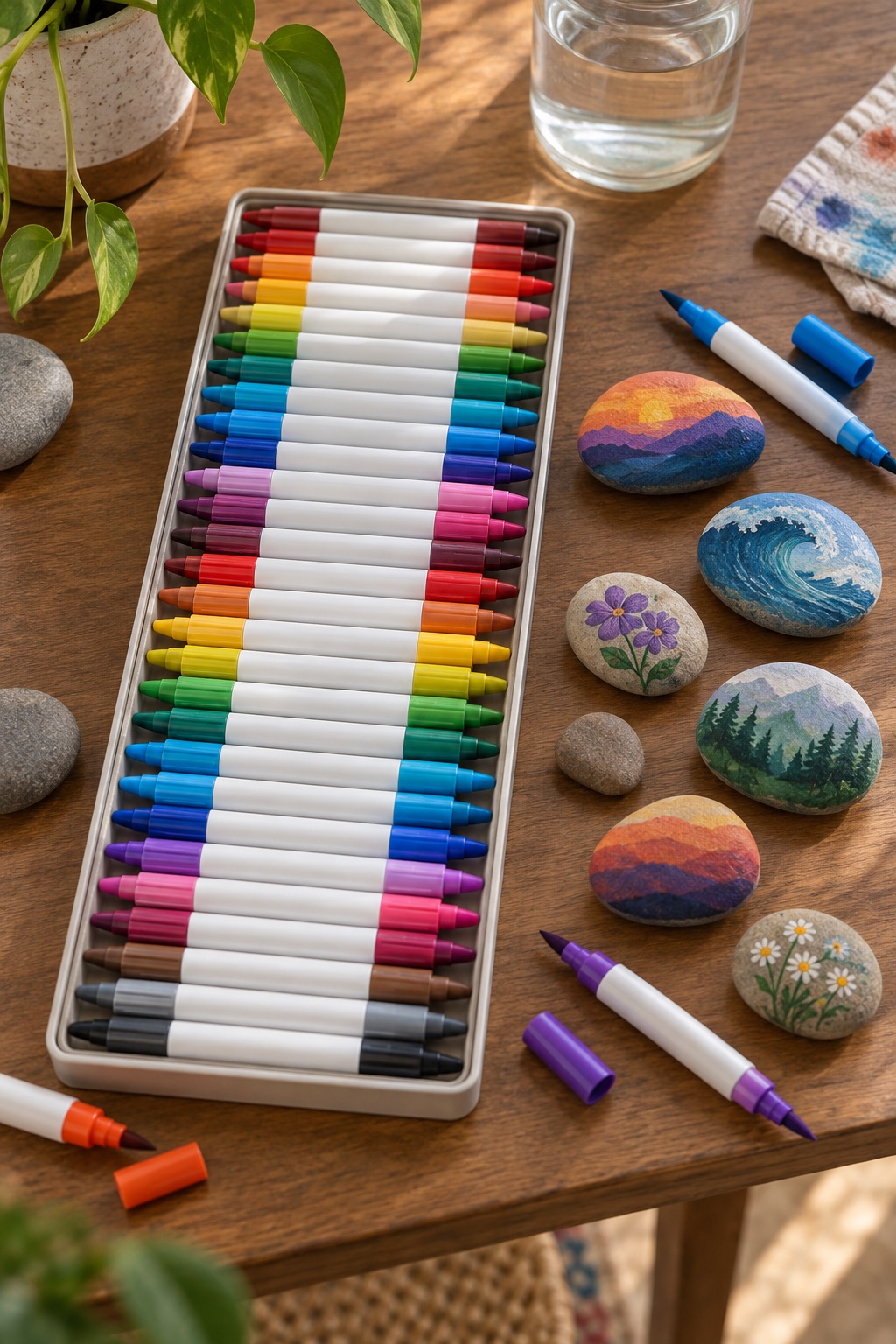
Grabie places two colors on each pen, providing a broad palette without 72 separate barrels. That format is useful for pebble landscapes or miniature gradients where neighboring shades need to stay close at hand.
Both ends are brush-style, so the set leans toward expressive lines and filled shapes rather than needle-fine lettering. A small stone with a sunset sky or layered leaves is a more natural project than a tightly scripted quote. Arrange the markers by color family and replace each cap promptly to protect both ends.
The color count is generous, but a double-ended marker requires attention to which cap belongs to which end. It is best for artists who value palette variety and do not mind a little more organization at the worktable.
5. JusArt 48-Color Automatic-Ink Brush Markers
| Key Specifications | |
|---|---|
| Colors | 48 |
| Tip | Flexible brush, roughly 1–8 mm strokes |
| Ink delivery | Automatic ink-control system |
| Included storage | Canvas bag, per listing |
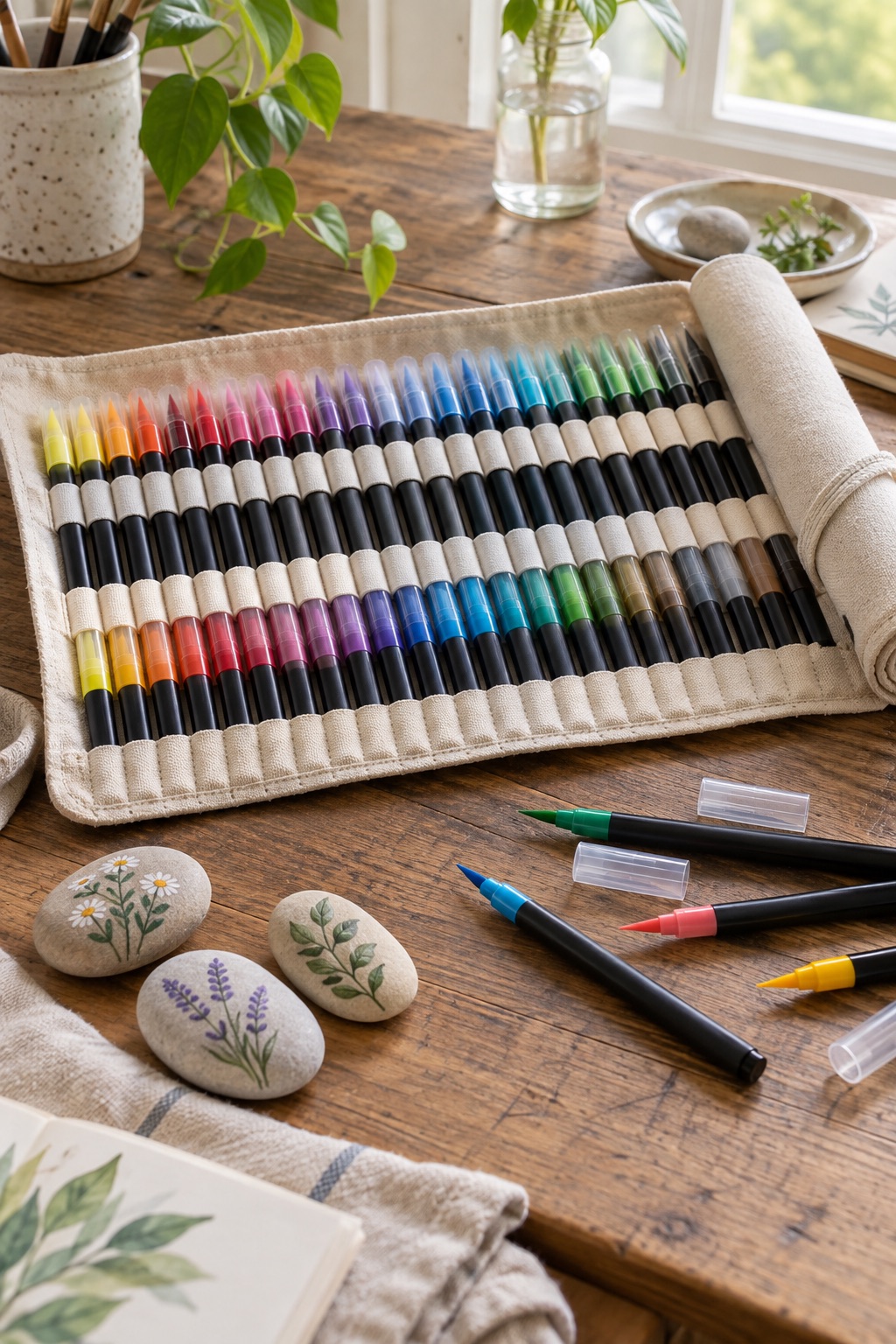
This JusArt set offers a middle ground between compact starter palettes and very large marker collections. Its brush tips can cover a pebble’s background efficiently, then form a thinner line at a lighter angle.
The listed canvas bag makes the markers easier to move to a class, a picnic table, or a shared family craft space. Forty-eight colors also provide more tonal choices for layered flowers and small scenic designs. The direct-ink design calls for shaking and horizontal storage according to the listing, so set up a flat place for the bag between sessions.
Because the brush can reach a relatively broad stroke, it is less predictable for tiny lettering than a fixed fine nib. This set best suits painters who want flexible coverage and color variety from one kit.
6. Coogert 30-Color Fine and Brush-Tip Markers
| Key Specifications | |
|---|---|
| Colors | 30 |
| Fine tip | About 1 mm |
| Brush tip | Approximately 0.5–5 mm |
| Ink base | Water-based acrylic paint |
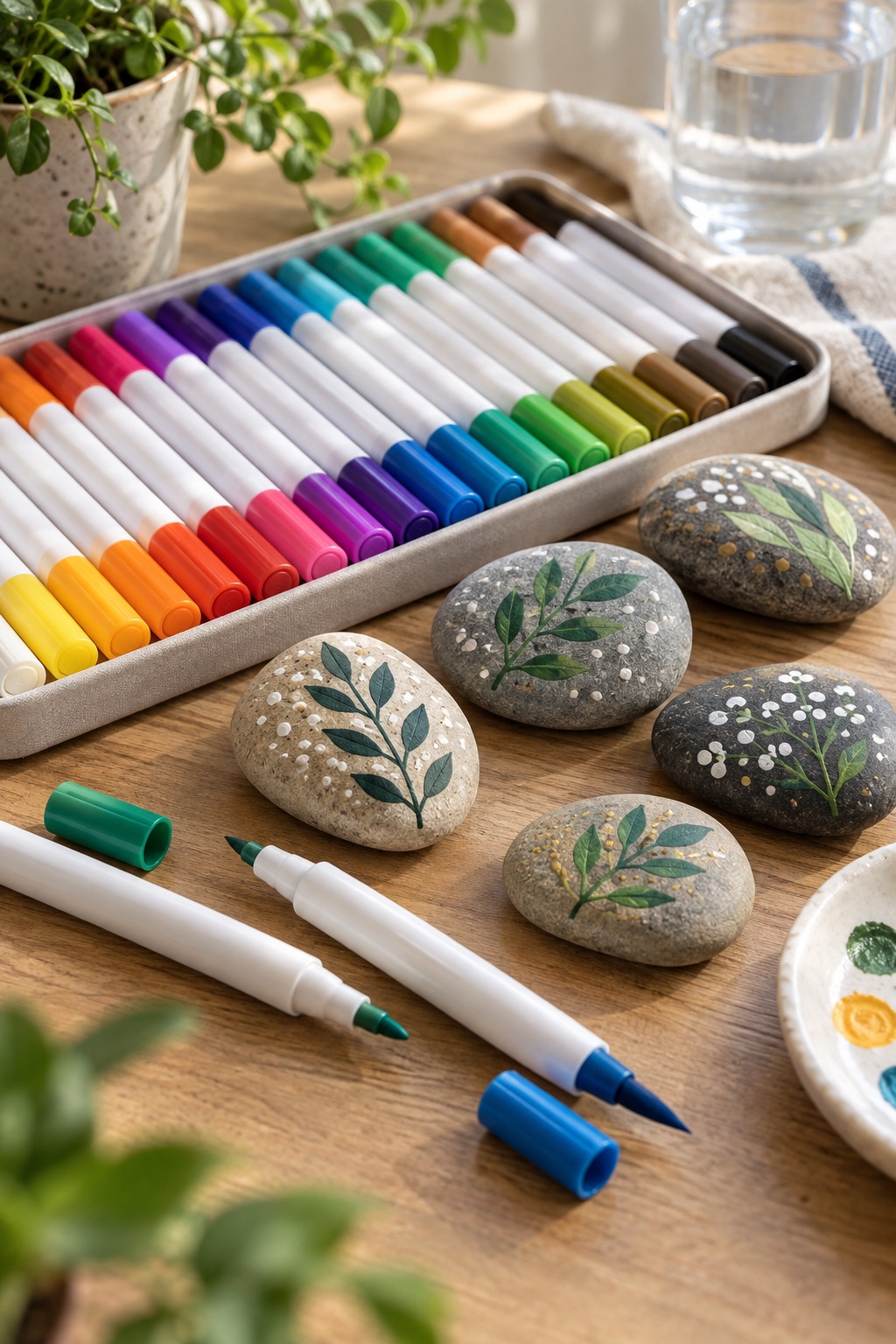
Coogert’s dual-tip arrangement makes practical sense on a small stone. Use the brush side to block in a leaf or flower and the fine side to add veins, stems, and a clean edge without reaching for another pen.
The thirty-color palette is broad enough for simple nature motifs while remaining manageable on a small table. The listing identifies rock among several suitable surfaces, so the set can also serve paper planning and other crafts. On porous stone, a light base coat can make pale colors stand out more clearly.
The fine point is not as slender as the extra-fine-only options below. If your projects are mostly intricate line art on tiny pebbles, that difference matters; if you want one marker to both fill and outline, it is a useful trade-off.
7. JusArt 30-Color Brush Markers
| Key Specifications | |
|---|---|
| Colors | 30 |
| Tip | Flexible brush, about 1–8 mm strokes |
| Ink delivery | Automatic ink-control system |
| Ink base | Water-based acrylic paint |
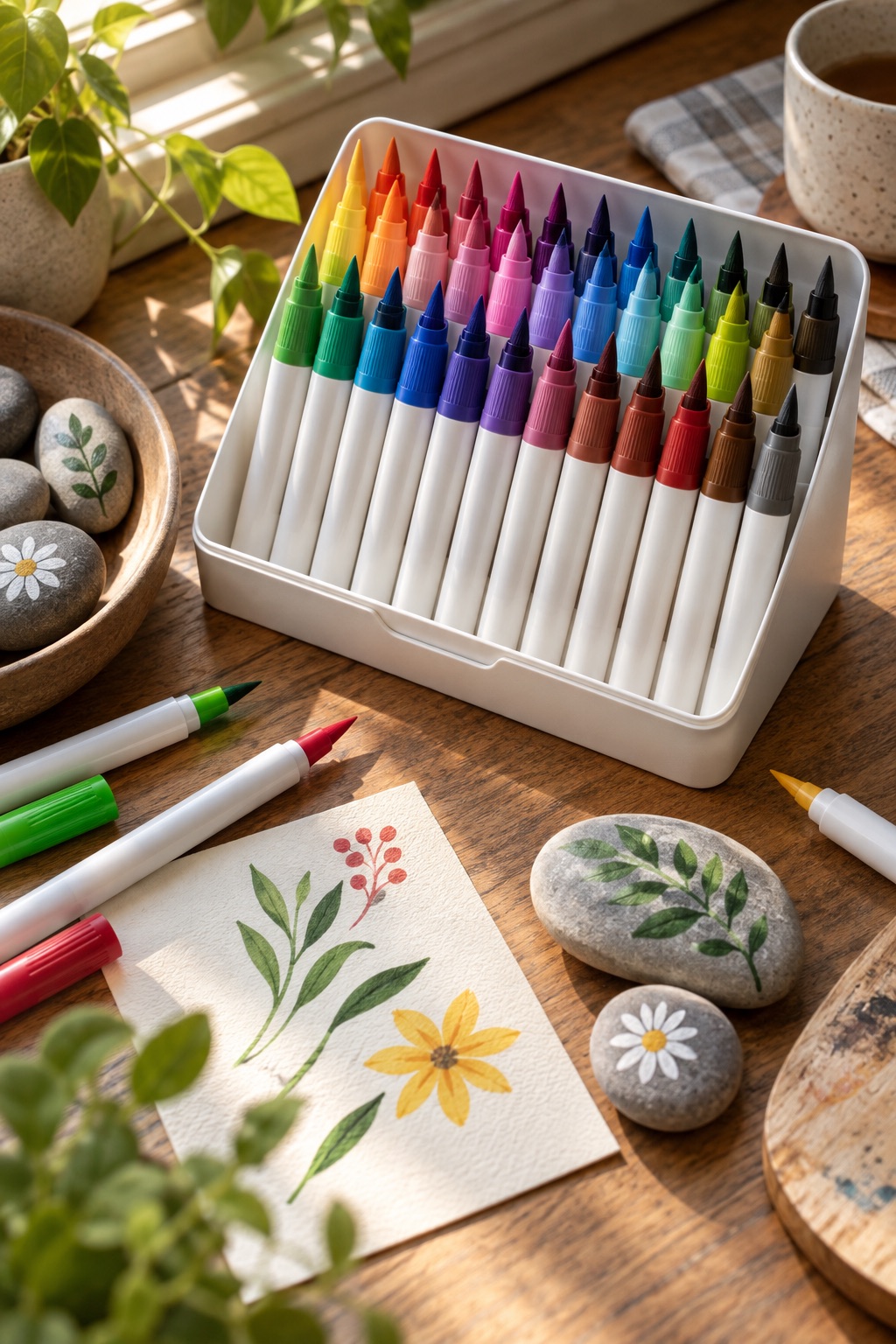
If the 48-color JusArt collection feels larger than you need, this 30-color version keeps the same brush-led approach in a smaller palette. It is suitable for repeated designs where you reach for a few dependable colors rather than a different shade for every pebble.
Pressure and angle change the stroke, so the marker can make both a slim branch and a fuller petal. The listing identifies rock, wood, glass, and other craft surfaces. Shake the pens as directed and store them horizontally to keep the ink system ready for the next project.
This is not a precision-only kit: the broad end of the brush range can be too large for the smallest dots. Choose it for loose botanical work and compact storage, or add an extra-fine pen for miniature text.
8. NICETY 128-Color Fine and Brush-Tip Markers
| Key Specifications | |
|---|---|
| Colors | 128, including 12 metallic shades |
| Fine tip | About 1 mm |
| Brush tip | Approximately 0.5–5 mm |
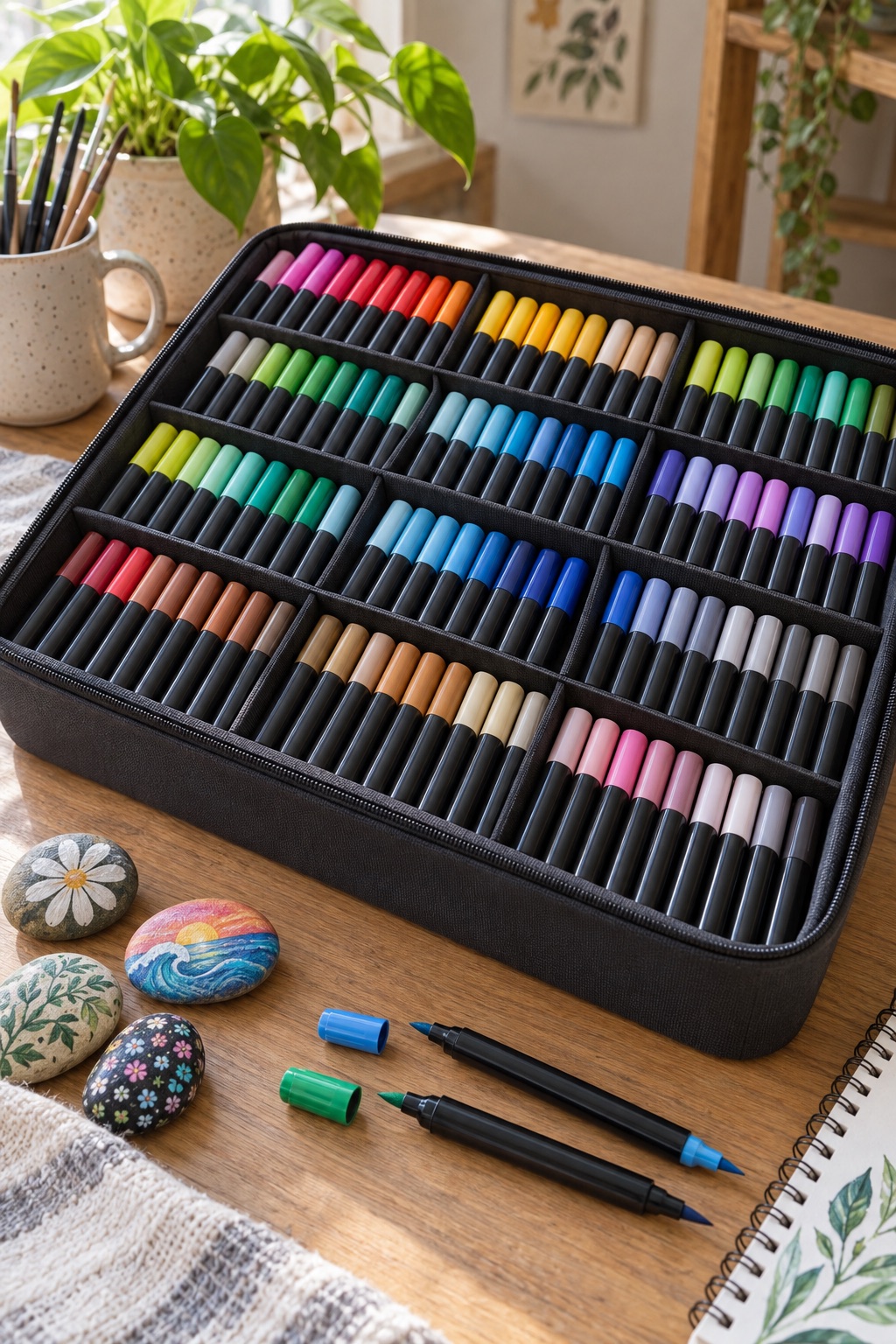
| Storage | Compartmented carrying case, per listing |
A very large palette can help with detailed scenes that need several greens, skin tones, or subtle sky colors. NICETY combines a fine point for line work with a brush tip for broader shapes, so the colors can support both stages of a design.
The included carrying case is important here: 128 loose markers would overwhelm a small craft surface. Keep the pens in their slots and make a color swatch card, because cap colors may not perfectly predict a dried mark on stone.
This is more set than most first-time pebble painters need. It suits someone making varied batches, gifts, or intricate scenes regularly, provided there is room to store and maintain the collection. A smaller kit is easier to manage for occasional projects.
9. Coogert 36-Color Extra-Fine Markers
| Key Specifications | |
|---|---|
| Colors | 36 |
| Tip | 0.7 mm extra-fine nylon point |
| Ink base | Water-based acrylic paint |
| Listed surfaces | Rock, wood, canvas, glass, ceramic, and fabric |
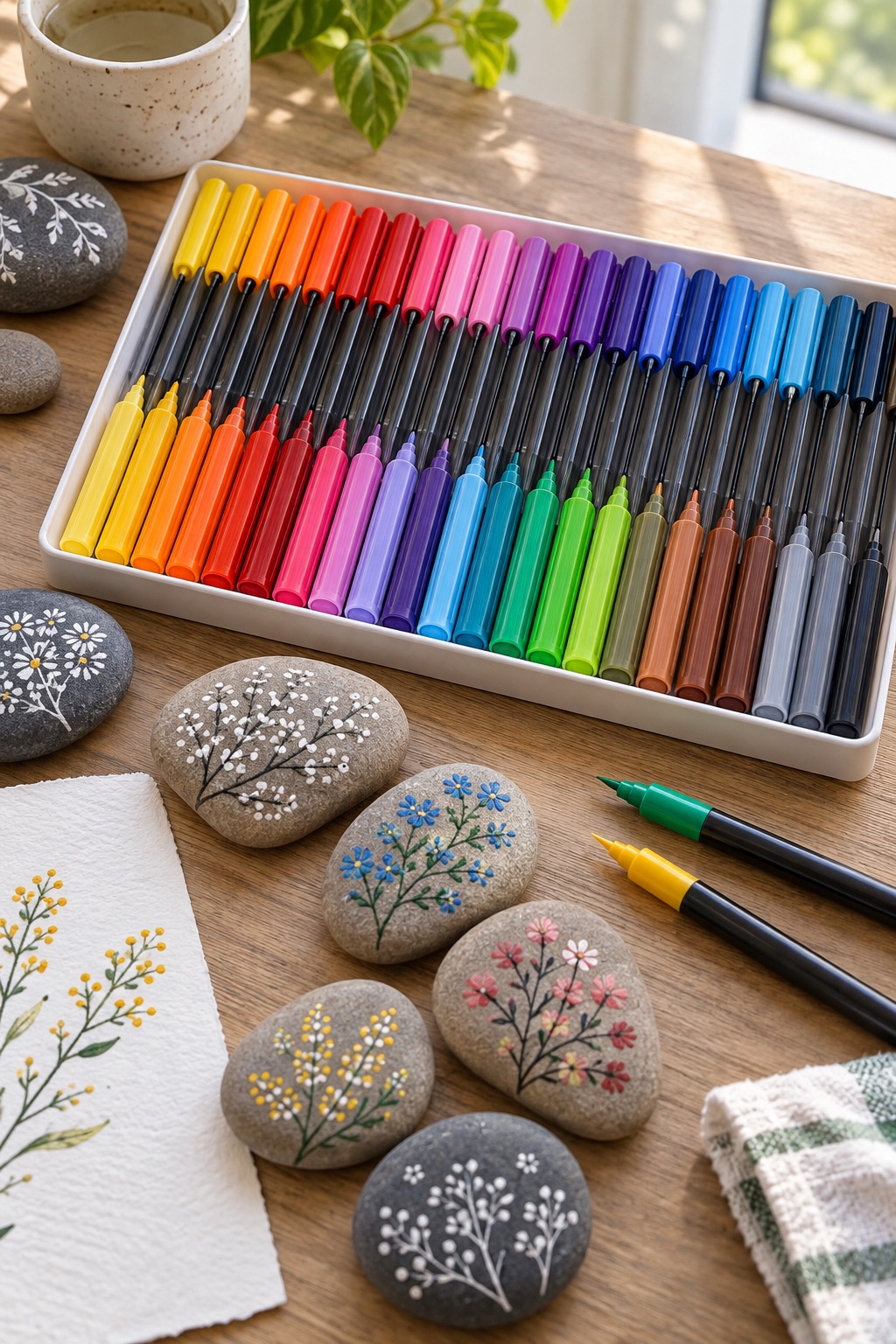
For small lettering, dotted borders, and delicate flower centers, a fixed 0.7 mm point offers a different kind of control from a brush nib. This Coogert set is built around that extra-fine tip rather than trying to cover a pebble quickly.
Thirty-six colors leave room for tiny multicolor motifs without committing to a huge case. Work on a smooth, clean surface: a rough stone can interrupt a narrow line and wear a fine point faster than it would a broader nib. A simple base coat can also help a pale detail show on dark rock.
The trade-off is speed. Filling a large background with an extra-fine marker takes time, so this kit is best as a detail-focused choice or a companion to wider paint pens.
10. ARTISTRO 30-Color Extra-Fine Marker Set
| Key Specifications | |
|---|---|
| Colors | 30 |
| Tip | Extra-fine precision point |
| Packaging | Carton box, per listing |
| Listed surfaces | Rock, glass, wood, fabric, and canvas |
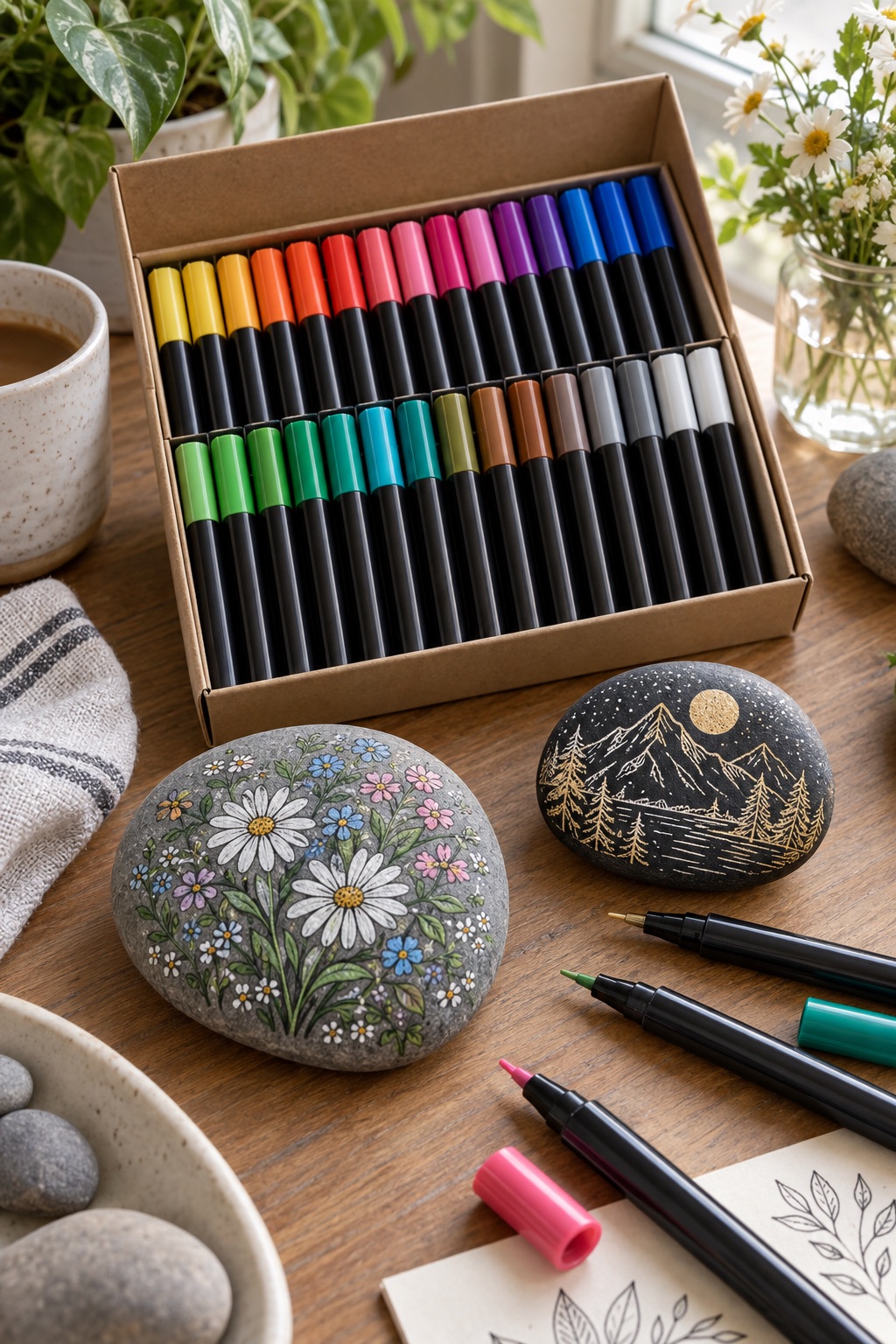
This ARTISTRO set is another precision-minded option for artists who want neat outlines and small decorative marks. The 30-color range is manageable for a tabletop project, and the extra-fine point supports repetitive patterns on palm-size stones.
A carton box keeps the colors together between sessions. Make a quick test strip before using a pen on a finished design, especially when a stone has a sealed or glossy base; the mark can look different from its appearance on paper. Keep lids secure so the small nibs do not dry out.
It is not designed to be your fastest background-filling tool. Choose this set when the pleasure of the project is in fine botanical lines, miniature scenes, or crisp borders rather than broad blocks of paint.
11. ARTISTRO 24-Color Pastel Dual-Tip Markers
| Key Specifications | |
|---|---|
| Colors | 24 pastel shades |
| Fine tip | About 1 mm |
| Brush tip | Approximately 1–5 mm |
| Ink base | Water-based acrylic paint |
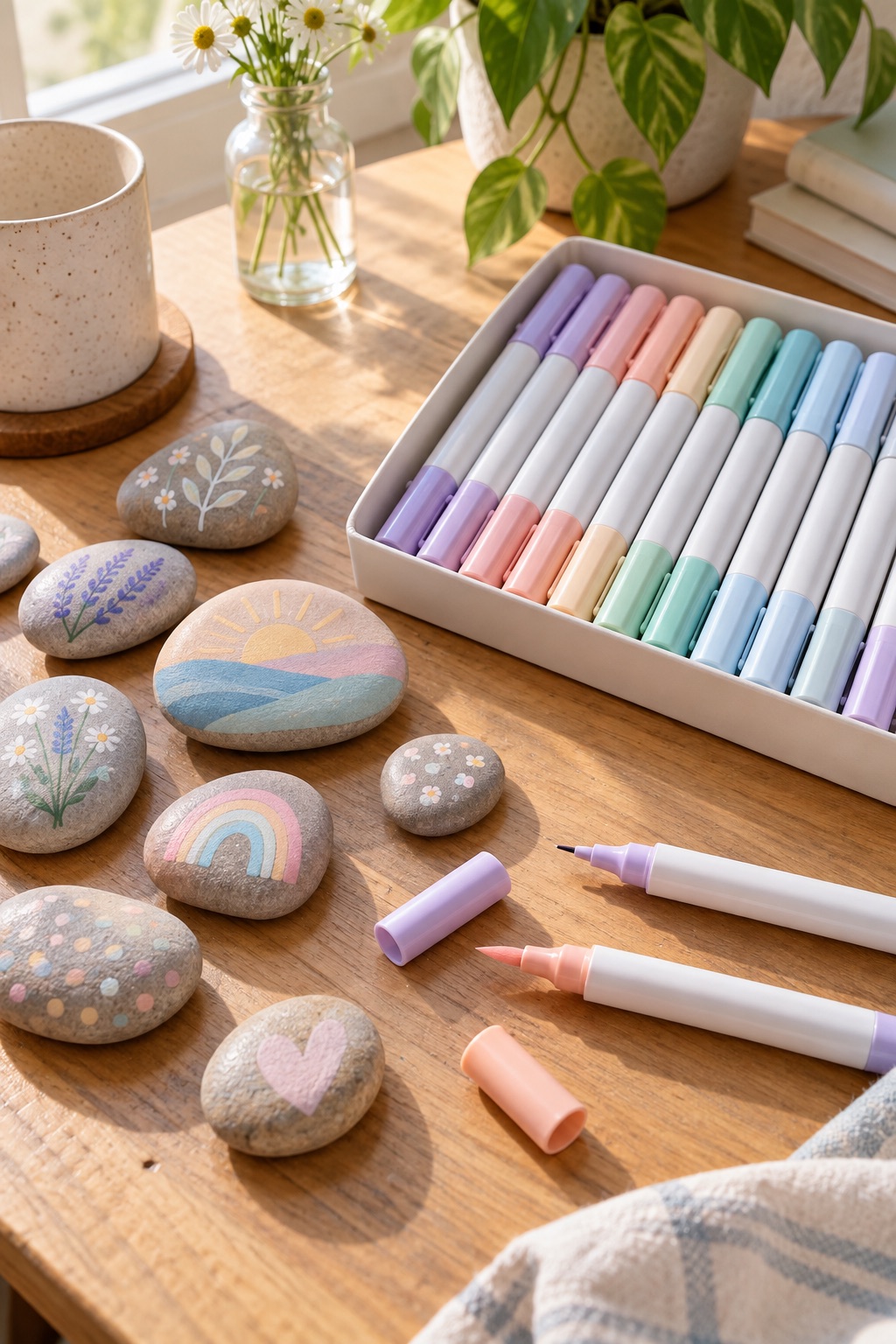
Pastels create a softer look than the bright primary-heavy palettes above. This ARTISTRO set pairs a fine point for outlines with a brush side for larger shapes, making it suitable for small rainbows, pale flowers, and gentle landscape stones.
The listed pre-activated tips do not need repeated pressing before use. Twenty-four colors offer enough variety for a cohesive pastel collection without taking over the desk. On dark stones, test opacity first; a light base coat may help delicate shades read clearly.
Pastel colors are not the best match for every project. If you want high-contrast black-and-white mandalas or saturated holiday motifs, choose a different palette. For a coordinated gift set of softly colored pebbles, the narrow color theme is an advantage.
How to Choose Markers for Small-Stone Art
Start with the mark you want to make. A fixed extra-fine nib gives the most predictable narrow line. A flexible brush can move from a thin stroke to a small fill but takes practice.
A dot tip is efficient for repeating circles, petals, and mandala rings. Dual-tip markers are convenient when you want both outlining and filling in one color.
Match the palette to the project. A 24- to 36-color set is often enough for a first batch of floral or geometric stones. Larger sets make more sense when you paint varied landscapes, sell or gift many pieces, or need subtle shade differences.
Metallic and pastel colors can change character on dark rock; test them over the surface you actually plan to use.
Prepare and protect the surface. Wash stones, allow them to dry completely, and avoid a crumbly or heavily textured face for fine lines. Work in thin layers and let them dry before overlapping colors.
A sealer may be appropriate for handling or outdoor display, but follow the marker and sealer manufacturers’ compatibility and curing directions. Painting a stone does not make it safe for food contact.
Think about storage. A case or tray helps keep tips capped and colors easy to find. Follow the particular maker’s instructions for horizontal storage, shaking, and activation. Keep markers away from heat and supervise children using any craft materials.
Frequently Asked Questions
Do I need to prime a pebble before using acrylic paint markers?
Not always. Smooth, clean, dry stones can work directly, but a light base coat can improve contrast or even out a porous surface. Test one stone before preparing a whole batch.
What tip size is easiest for tiny details?
An extra-fine fixed point is easiest to control for very small lines. A 1 mm fine tip is a useful all-around compromise; a brush tip can also make a narrow stroke with practice.
Will the designs survive outdoors?
Do not assume so based on a listing claim alone. Outdoor durability depends on the stone, preparation, paint, curing, and any compatible protective finish. Follow product directions and expect weathering over time.
Can I use the same markers on ceramic or glass?
Many sets list those surfaces, but curing and cleaning requirements differ from rock. Read the exact marker instructions before decorating a mug or other object; do not paint food-contact areas unless the maker specifically says the product is suitable.